
Dental Crowns in Pm Palem Visakhapatnam
Restore, Protect and Strengthen a Damaged Tooth
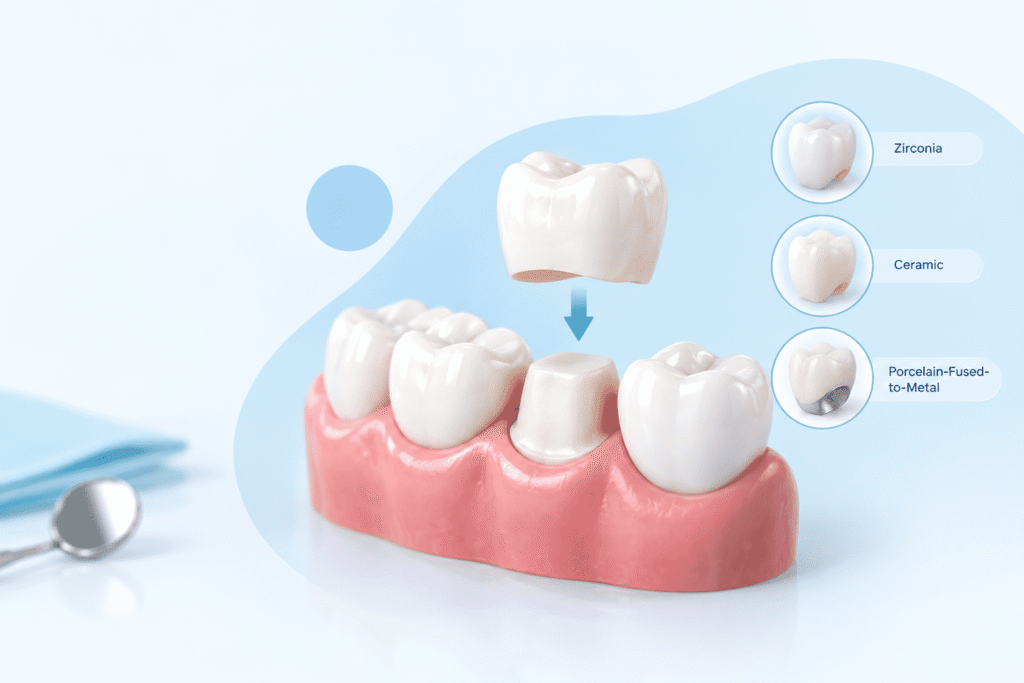
A Dental Crowns in Visakhapatnam is a custom-made covering that fits over a tooth that has been damaged or weakened, helping bring back its normal shape, strength, and function.
At Sri Sai Smile Care, your dentist examines the condition of your tooth, bite, and surrounding gums before recommending a crown.
You will also be guided through the available options so you can understand your treatment before making a decision.
Restore Damaged Teeth
Natural-Looking Results
Planned for You
UNDERSTANDING DENTAL CROWNS
Do You Have a Damaged or Weak Tooth?
A damaged tooth may not always cause severe pain, but it can become weaker over time.A damaged or weakened tooth may need more support than a regular filling can provide.
After examining the tooth, your dentist can determine whether a crown would be a suitable way to restore and protect it.
When Should You Have Your Tooth Examined?

A Broken or Cracked Tooth
A tooth that is chipped, cracked, or broken may need more protection than a simple filling can provide.
A Large Filling
A tooth with a large filling may have limited remaining tooth structure. A crown may be used to rebuild the tooth and provide added coverage when enough natural tooth structure has been lost.

A Weak or Worn Tooth
Teeth that have become significantly weakened or worn may need a stronger restoration to bring back their shape and function.
A Tooth After Root Canal Treatment
Some teeth treated with a root canal may need a crown to restore and protect the remaining tooth structure.

A Damaged or Old Crown
A crown that is loose, chipped, worn, or damaged may need to be examined to determine whether it should be repaired or replaced.
Don't Wait for Severe Pain
Pain is not the only reason to have a damaged tooth examined. A visible crack, broken tooth, repeated filling problems, or changes when biting can also be reasons to schedule a dental examination.
Your dentist will determine whether a crown is appropriate or whether another treatment would better suit your tooth.
What Is a Dental Crown?
A dental crown fits over a tooth that has been significantly damaged or weakened, helping rebuild its shape and provide coverage for the remaining tooth. It is also commonly known as a tooth cap.
It covers the visible part of the tooth while helping protect the remaining natural tooth structure.
What Can a Dental Crown Do?
01
Restore a Damaged Tooth
A crown can restore the shape of a tooth that has been badly broken, cracked, or damaged.
02
Protect a Weakened Tooth
When a tooth has lost a significant amount of its natural structure, a crown may provide additional protection during normal biting and chewing.
03
Improve the Tooth's Appearance
Tooth-coloured crowns can be made to match the look of your natural teeth for a more seamless smile.
04
Restore Everyday Function
A properly planned crown can help restore the tooth so you can use it more comfortably for normal eating and biting.
Types of Dental Crowns
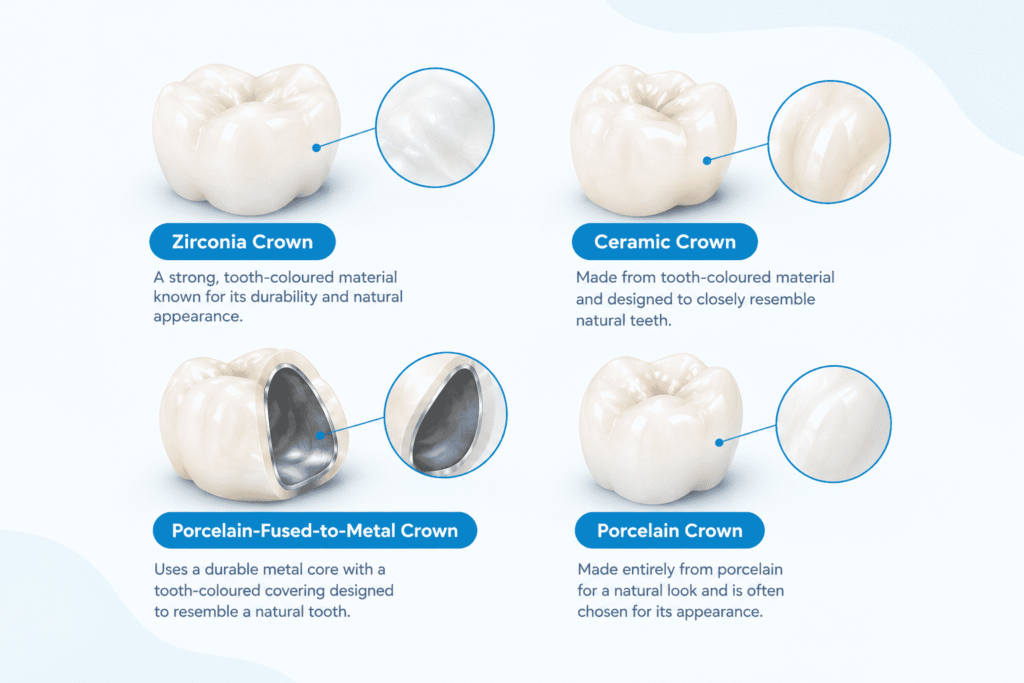
Dental crowns can be made from different materials, and the right option depends on the tooth being treated, its location, your bite, appearance preferences, and overall dental condition.
Your dentist will explain the available choices before treatment so you can understand the differences.
01
Zirconia Crowns
Zirconia is a strong, tooth-coloured material used for many types of dental crowns.
It can offer a natural-looking appearance along with good strength for everyday use.
02
Ceramic Crowns
Ceramic crowns are made from tooth-coloured material and are designed to closely resemble natural teeth.
They may be considered when appearance is an important factor.
03
Porcelain-Fused-to-Metal Crowns
These crowns use a durable metal core with a tooth-coloured covering designed to resemble a natural tooth.
They have been used for many years and can be suitable in certain situations.
Which Crown Is Right for You?
There is no single crown material that is best for every patient.
Your dentist may consider:
- Which tooth needs the crown
- How much healthy tooth structure remains
- The position of the tooth
- Your bite and chewing forces
- The appearance you want
- The condition of your gums and surrounding teeth
The goal is to select a crown that is appropriate for the tooth while balancing strength, appearance, comfort, and long-term care.
How Does Crown Treatment Work?
Dental crown treatment usually involves examining the tooth, preparing it for the crown, creating the restoration, and placing it securely on the tooth.
The exact process can vary depending on the condition of your tooth and the type of crown selected.
01
Examination & Treatment Planning
Your dentist checks the condition of the tooth, nearby gums, and how your teeth come together to decide the most suitable treatment. If necessary, dental X-rays or other checks may be recommended.
The suitable crown type and treatment plan are then discussed with you.
02
Tooth Preparation
The tooth is carefully prepared so the crown can fit properly over it.
If the tooth requires other treatment, such as root canal treatment, this may need to be completed before the final crown is placed.
03
Crown Creation & Trial
The required measurements or impressions are taken so the crown can be made to fit your tooth.
The crown is checked for shape, appearance, and fit before final placement.
04
Crown Placement
Once the crown is ready and the fit is satisfactory, it is securely placed on the tooth.
Your dentist checks your bite and makes any necessary adjustments for comfortable use.
Will You Need a Dental Crown After a Root Canal?
After a root canal, the tooth may require additional support if a substantial portion of its natural structure has been weakened or removed.
A crown can provide full coverage and help restore the tooth for normal use.
Whether a crown is needed is determined by the tooth’s condition, the amount of remaining structure, and your dentist’s clinical assessment.
Your dentist will examine the remaining tooth structure, its location, bite, and overall condition before recommending one.
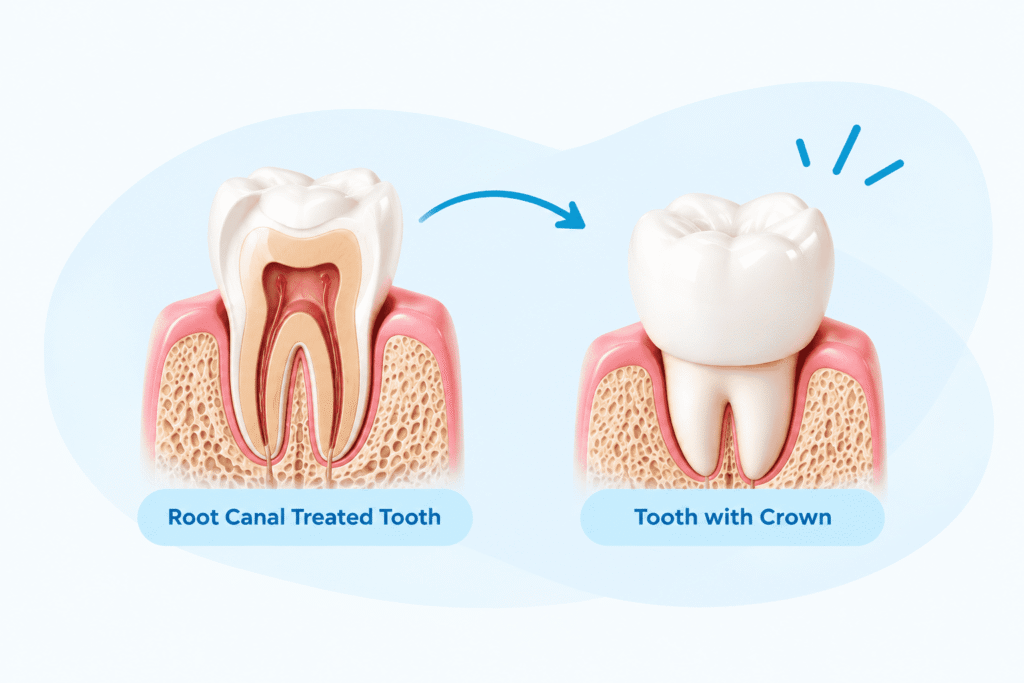
Why May a Crown Be Recommended?
Root canal treatment focuses on treating problems within the inner part of the tooth, where the nerves and affected tissues are located.
A crown serves a different purpose—it restores the outside of the tooth when additional protection or restoration is needed.
A crown may be considered when:
- A large portion of the tooth has been lost
- The tooth has a large existing restoration
- The remaining tooth structure is weakened
- The tooth needs protection during normal biting and chewing
If a tooth has been weakened after extensive damage or root canal treatment, a crown may be used to provide full coverage and support.
The need for a crown depends on the amount of tooth structure remaining and the condition of the tooth.
How Are Root Canal Treatment and Dental Crowns Different?
Root Canal Treatment
Treats problems inside the tooth.
Dental Crown
A dental crown fits over the prepared tooth, helping rebuild its shape and restore its normal function.
- Depending on the condition of the tooth, both treatments may be part of the overall treatment plan.
When Should You Ask Your Dentist?
A root canal-treated tooth may benefit from a crown when much of its natural structure has been lost or the tooth remains weakened.
Your dentist can examine the tooth and advise whether a crown is appropriate.
Your dentist can examine the tooth and recommend the appropriate next step based on its condition.
Why Might You Need a Dental Crown?
A dental crown can give added support to a tooth that has been badly damaged or weakened, while helping improve its shape, appearance, and everyday use.
Depending on the condition of the tooth, it may provide protection, restored function, and an improved appearance.
01
Protects a Weakened Tooth
A dental crown fits over the prepared tooth, providing coverage for the remaining natural tooth and helping it handle normal biting and chewing.
02
Restores the Shape of the Tooth
A crown can help reshape a tooth that has been extensively damaged, supporting normal biting and chewing while improving its overall appearance.
03
Helps Restore Chewing Function
When a damaged tooth is difficult or uncomfortable to use, restoring its shape can help you return to more comfortable everyday chewing.
04
Improves the Appearance of the Tooth
Tooth-coloured crown options can be designed to complement the surrounding teeth, making the restored tooth look more natural.
05
Supports a More Complete Smile
Restoring a badly damaged tooth can improve the overall appearance of your smile while also addressing the functional needs of the tooth.
Benefits Depend on Your Individual Case
A crown is designed to solve a specific dental problem, so the result depends on the condition of the tooth, the surrounding tissues, your bite, and how well the restoration is maintained.
Your dentist will explain what a crown can realistically achieve in your particular situation.
What Is the Cost of a Dental Crown in Visakhapatnam?
The total cost of a dental crown can vary based on the material chosen, the condition of the tooth, and whether any preparatory treatment is required before the crown is fitted.
A dental examination is needed to provide an accurate treatment plan and cost estimate.
It depends on the type of crown, the condition of the tooth, the treatment required before the crown, and other factors involved in planning and placing the restoration.
Rather than choosing a crown based only on price, your dentist should first examine the tooth and explain the suitable treatment options.
What Can Influence the Price of a Dental Crown?
01
Type of Crown
The overall cost may vary depending on the crown material and the design chosen for your tooth.
02
Condition of the Tooth
If the tooth needs treatment before the crown can be placed, those additional procedures may also influence the overall treatment plan and cost.
03
Amount of Tooth Structure Remaining
The amount of tooth structure that remains can affect the way the crown is prepared and fitted.
04
Location of the Tooth
The tooth’s location and the amount of pressure it handles while you eat can also affect which crown option is suitable.
05
Additional Dental Treatment
Before the crown is fitted, any underlying dental problems may need to be addressed to prepare the tooth for treatment.
Want to Know Your Crown Treatment Cost?
At Sri Sai Smile Care PM Palem Visakhapatnam, you can discuss your dental concern with the team and understand the recommended treatment, crown options, and associated costs before proceeding.
Frequently Asked Questions About Dental Crowns
Have questions about dental crowns? Here are some common questions patients ask before starting treatment.
01
What exactly is a dental crown?
A dental crown is a restoration that sits over a prepared tooth, covering the visible portion above the gum line.
It may be recommended when the tooth has suffered enough damage or weakening that a simple filling may not offer adequate support.
02
Does every damaged or broken tooth require a crown?
No. A small chip or minor area of damage may be treatable with a simpler restoration.
For more extensive damage, your dentist will assess how much usable tooth remains and determine which treatment can provide the appropriate support.
03
Will getting a dental crown hurt?
The procedure is generally carried out with local anaesthesia to help keep you comfortable while the tooth is prepared.
You may notice some sensitivity or mild discomfort afterward, which can vary depending on the tooth and the treatment involved.
04
When Is a Crown Considered After Root Canal Treatment?
Root canal treatment deals with the inside of an affected tooth, but the tooth may still need additional support afterward.
If a considerable amount of tooth structure has been lost, your dentist may recommend a crown to cover and reinforce the remaining tooth.
05
How Many Visits Does Crown Treatment Usually Require?
The number of appointments can vary depending on the tooth, treatment requirements, and type of crown being planned.
The timeline can depend on the tooth being treated, the crown material, laboratory work, and whether the tooth requires any treatment beforehand.
Your dentist can outline the expected process after examining your tooth.
06
What should I do to look after my dental crown?
Treat your crowned tooth much like your natural teeth.
Maintain regular brushing with fluoride toothpaste, clean carefully between your teeth, and avoid habits such as biting hard objects or opening packets with your teeth.
Routine dental visits also help monitor the crown and surrounding teeth.
07
What Factors Affect Dental Crown Cost in Visakhapatnam?
The final amount can vary from one crown treatment to another, depending on the individual treatment requirements.
The final amount can be influenced by the crown material, the condition of the tooth, preparation involved, and any other treatment needed.
A dental assessment allows the treatment requirements and estimated cost to be discussed clearly.
08
Why Is There No Single Crown Price for Everyone?
Each crown is designed to suit the specific tooth being treated, including its condition, position, and functional needs.
Two patients may both need a crown but require different materials, preparation, or additional treatment.
For this reason, an examination and treatment discussion are needed before an accurate cost can be given.
09
Can anyone get a zirconia crown?
Zirconia is one of the materials that may be considered for dental crowns, but the same option may not suit every tooth.
Your dentist can evaluate factors such as the tooth’s position, bite, remaining structure, and desired appearance before selecting the appropriate material.
10
Could a Dental Crown Be Right for Your Tooth?
If you have a tooth that is broken, heavily worn, weakened, or has previously received treatment, an examination can help identify the most suitable way to manage it.
Discuss your dental concern with our team and learn which treatment options may be suitable for your tooth.